Project Room
Brightidea's innovation platform reaches millions of end users at customers like Nike, Amazon, and Merck, yet enterprise teams were sometimes managing complex ideas outside it. How do you close that gap without turning Brightidea into a project-management tool?
- 90%+
- customer adoption
- +6%
- avg. session time
- 12 wks
- build to GA
Context
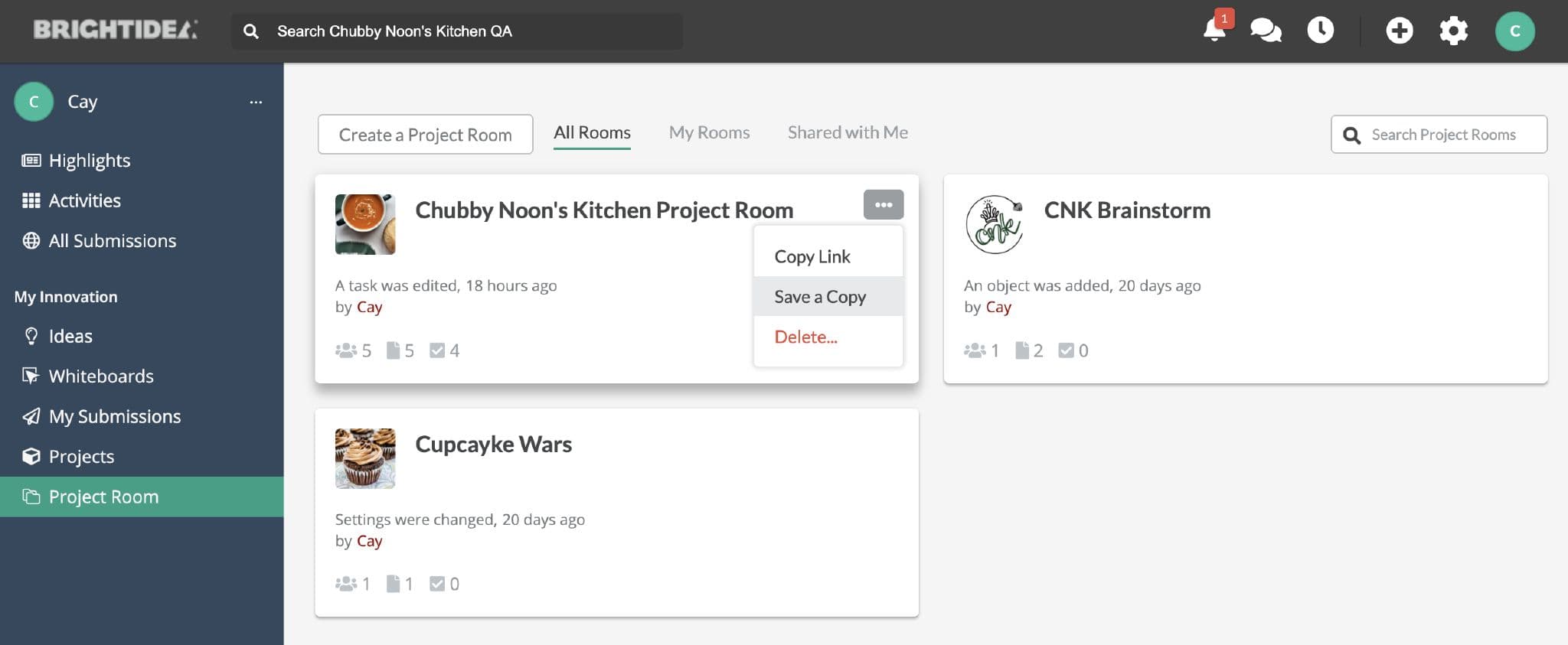
Brightidea provides an Innovation Management platform used by large enterprises, including Nike, Amazon, GE, Adobe, 3M, and Merck, built around a highly customizable pipeline that admins adjust to their own innovation or R&D process.
Project Room was a collaborative workspace for teams to work on a complex idea with multiple related artifacts (docs, whiteboards, sheets, tasks) so everything stayed unified as it moved through the innovation pipeline. It started by identifying a gap in how customers actually worked: some teams were managing complex ideas with tools entirely outside our platform.
I owned it end to end, from discovery through GA release, measurement, and post-release improvements.
Signal & discovery
A conversation with a CSM surfaced that some customer teams were using alternative tools to manage complex ideas, especially when multiple related documents or artifacts were involved.
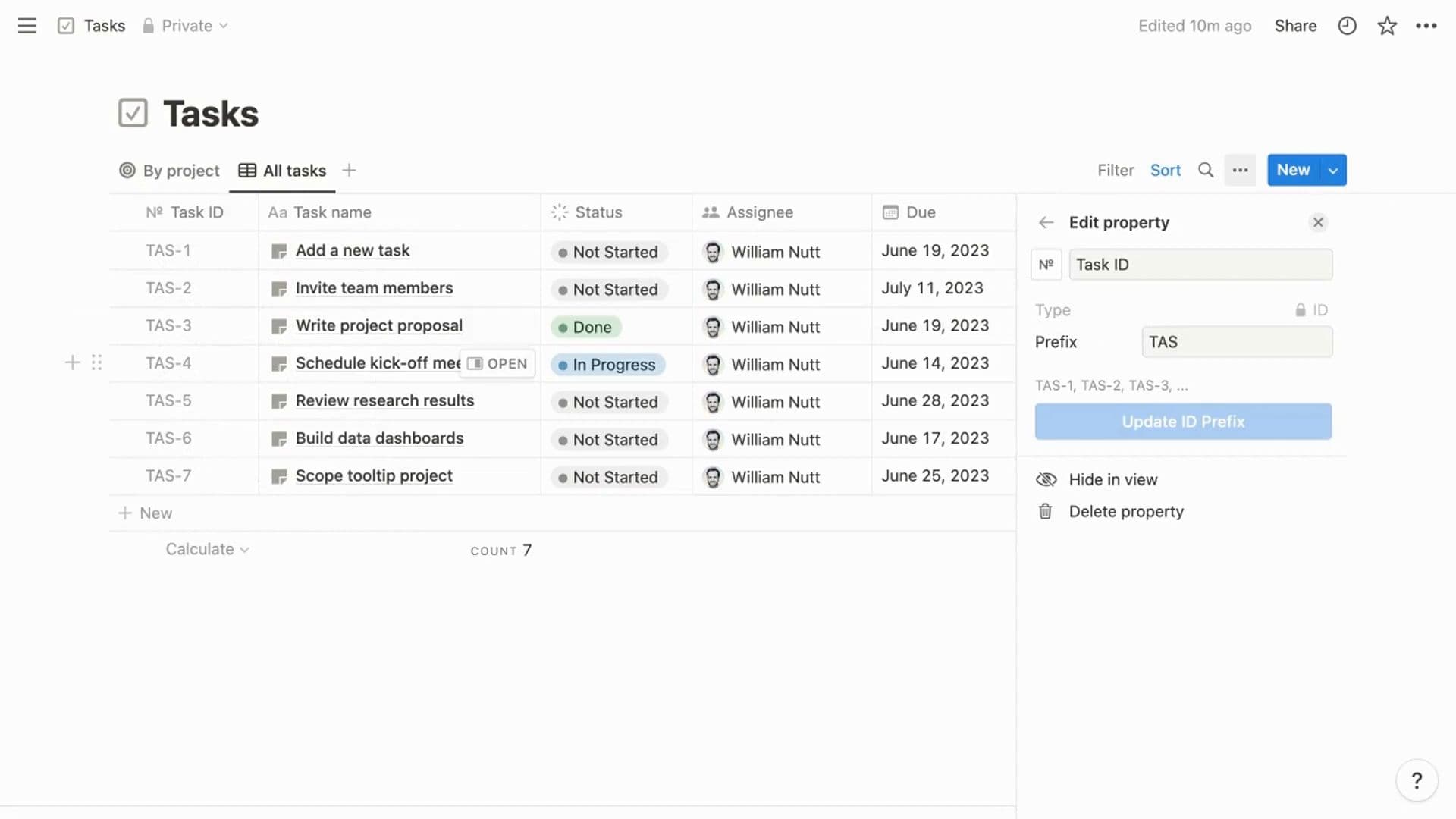
I talked to several customers across different industries and found this wasn't an isolated need. While most ideas don't need a Project Room, enough did to warrant further investigation. Workarounds included Notion, Box, Microsoft, and Google, but none of them were a perfect fit.
Why prioritize it
Project Room wasn't on the roadmap. Three things changed that: it represented a gap in our core competency (the innovation process itself), it was high need/value for customers with no clear alternative, and there was clear upside for us in adoption, retention, and upsell.
Initially there was approval to pursue it as a limited proof of concept and to get feedback from a few test customers.
- 50%
- target customer adoption (3 mo. post-rollout)
- +5%
- target session time increase
- +5%
- target new registrations via invitations
From proof of concept to GA
I partnered with a designer and a senior engineer. After prioritizing initial requirements, we had designs for initial features within a few days. It took about a week and a half to build a functional proof of concept (no persistence, no drag-and-drop polish) that we could try internally and share with clients.
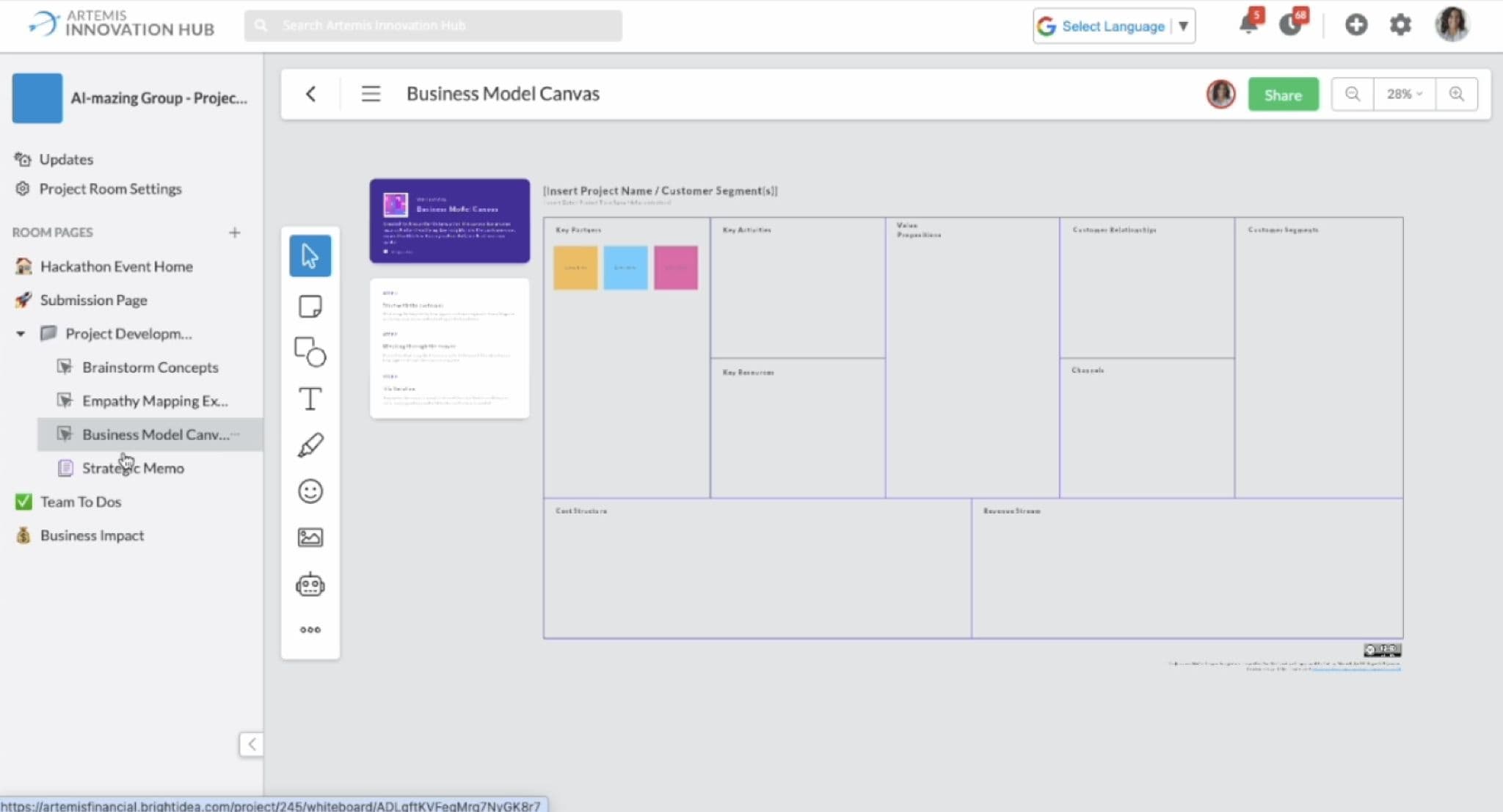
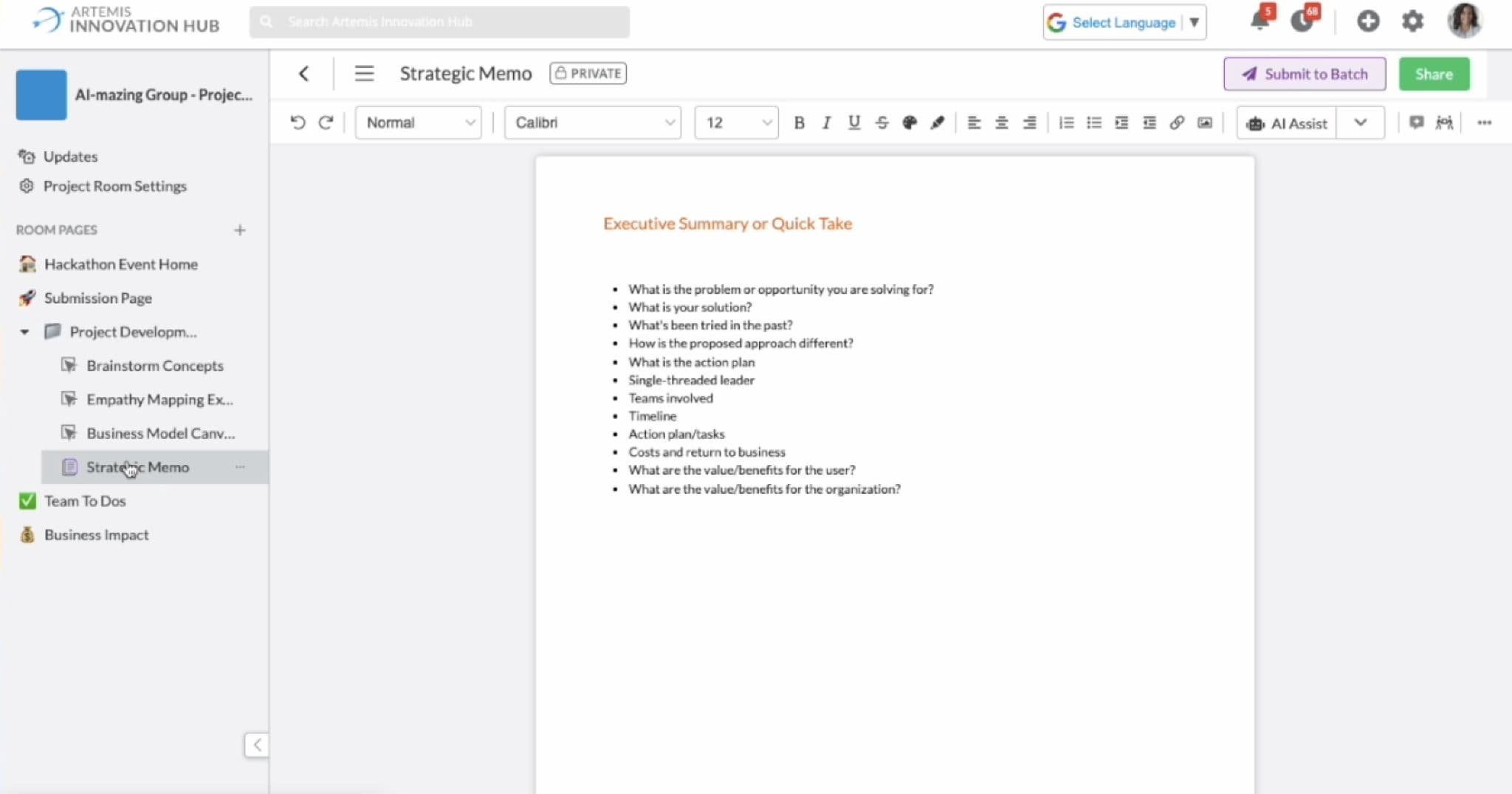
I sliced the roadmap into Now/Next/Later. The first version let a single user add native files and links to collect a project's artifacts in one place; we shipped that narrow version to a few customers to confirm we were building the right thing before adding persistence, team management, folders, room settings, reordering, a business-impact page, and task management.
Go-to-market
I ran two design reviews with the product team and CSMs, then did a brief demo at an all-hands and met with sales and support. We released a beta behind a feature toggle, then flipped it to on-by-default for general availability.
Results
Adoption climbed from nearly 30% during the six-week beta to 85% within three months of GA, and over 90% today. Average session time increased 6%, and we saw new, previously unregistered users join directly as a result of Project Room invitations.
- 90%+
- customer adoption
- +6%
- avg. session time
- 12 wks
- build to GA
Hindsight
Task management was the one place reality outran the plan. In some cases, team sizes on individual ideas/projects ended up even larger than we'd anticipated. To serve them better, we needed to add lazy loading, sorting, filters, and notes for tasks. We added these, but it ran counter to the original goal of keeping Project Room very simple.
In hindsight, it was a good problem to have: some teams were more active on individual ideas than we expected.